

Zero Trust Security Market Set to Reach US$ 111.01 Billion by 2032, Led by North America's 37.4% Market Share
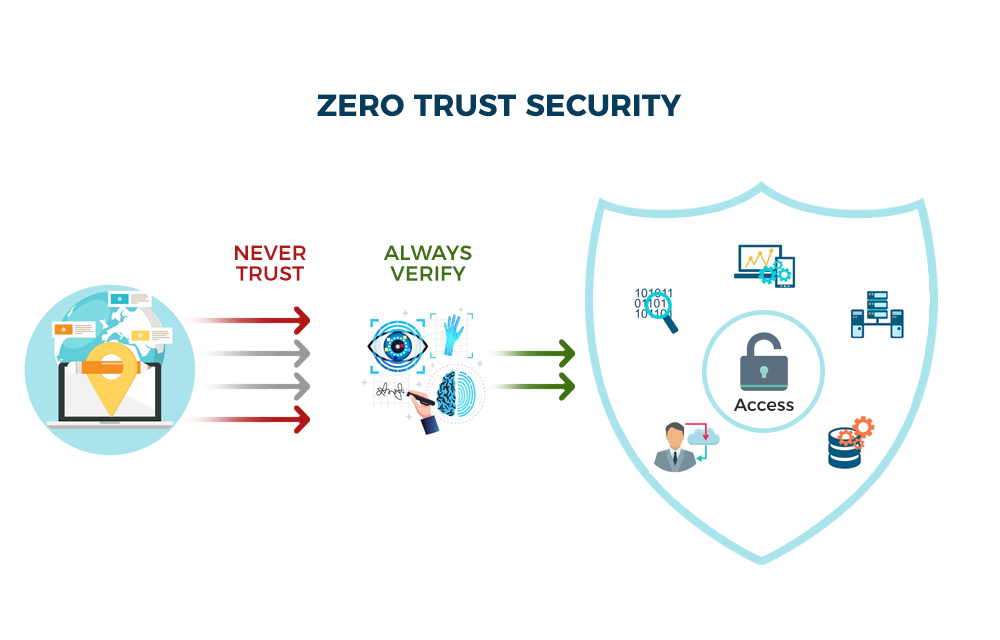
Zero Trust Security Market Size
Zero Trust Security Market is gaining momentum as enterprises replace perimeter-based models with identity-first, continuous verification to combat advanced cyber threats & secure hybrid environments.”
AUSTIN, TX, UNITED STATES, February 27, 2026 /EINPresswire.com/ -- The Zero Trust Security Market reached US$ 37.06 billion in 2024 and is expected to reach US$ 111.01 billion by 2032, growing at a robust CAGR of 14.64% during the forecast period 2025–2032.— DataM Intelligence
Market growth is driven by the increasing frequency of cyberattacks, the shift towards remote and hybrid work models, and the need for secure access in distributed environments. Advancements in cloud security technologies, rising adoption of zero trust frameworks by enterprises, growing regulatory pressures for data protection, and heightened investments in cybersecurity solutions are further accelerating market expansion.
Download your exclusive sample report today: (corporate email gets priority access): https://www.datamintelligence.com/download-sample/zero-trust-security-market
Key Industry Developments
United States:
-January 2026: National Security Agency (NSA) released the first two products in its Zero Trust Implementation Guidelines (ZIGs), delivering actionable recommendations for federal agencies to achieve target-level Zero Trust capabilities across technologies and processes, including a Primer and Discovery Phase aligned with the DoD Zero Trust Framework.
-October 2025: Oracle announced key advancements in its Zero-Trust Private Router (ZPR) within Oracle Cloud Infrastructure, supporting multi-VCN deployments, broader service coverage, and IAM policy integration to block lateral movement and data exfiltration in cloud environments.
-August 2025: Hewlett Packard Enterprise (HPE) unveiled AI-driven security innovations at Black Hat USA, including HPE Juniper Networking Next-Generation Firewalls and HPE Zerto integration with CrowdStrike for enhanced ransomware resilience and hybrid cloud data protection, with Zerto hub availability planned for Q4.
Japan:
-May 2025: Internet Initiative Japan (IIJ) launched Safous Privileged Remote Access, a comprehensive Zero Trust platform integrating ZTNA, Privileged Access Management (PAM), and Identity and Access Management (IAM) for secure, streamlined remote access to critical systems.
-April 2025: Rakuten Mobile partnered with Cloudflare as Japan's inaugural Managed Security Services Provider (MSSP) for Zero Trust solutions, targeting SMBs against hybrid work threats amid 385 million daily cyber attacks in Q1 2025.
-May 2025: Japan's Active Cyber Defence Law was enacted, requiring proactive identity-centric security, continuous monitoring, and METI's plan to triple cybersecurity sales to over ¥3 trillion in a decade through Zero Trust-aligned investments.
Key Merges and Acquisitions:
-Zscaler acquired AI security pioneer SPLX to expand its Zero Trust Exchange platform, enabling protection of the entire AI lifecycle on a single integrated zero‑trust architecture and reinforcing its leadership in AI‑driven zero trust security.
-Zscaler signed an agreement to acquire managed detection and response specialist Red Canary, integrating advanced threat detection and AI‑powered security operations to strengthen its zero‑trust offerings for enterprise customers.
-Microsoft announced the acquisition of RiskIQ, a digital threat intelligence and attack surface management company, to further bolster its Zero Trust Security portfolio across cloud and hybrid environments.
-Palo Alto Networks moved to acquire CyberArk, combining CyberArk’s identity‑first security with Palo Alto’s network, cloud, and AI‑driven threat defense to deliver a more unified, end‑to‑end zero trust implementation framework.
Key Players:
IBM Corporation | Akamai Technologies | Palo Alto Networks | Cisco Systems, Inc. | Trend Micro Incorporated | Okta | Broadcom | VMware, Inc. | FireEye | Check Point Software Technologies Ltd.
Key Highlights: Top 5 Players in Zero Trust Security Market 2026
-Palo Alto Networks: Launched Prisma Access 2.0 with AI-driven zero trust network access (ZTNA) capabilities, enabling adaptive policy enforcement and continuous user verification to secure hybrid workforces against identity-based threats.
-Cisco Systems, Inc.: Introduced Secure Access platform integrating Duo and Umbrella for zero trust, providing identity-centric access controls and DNS-layer security to block unauthorized lateral movement in enterprise networks.
-Okta: Rolled out Okta Identity Governance with contextual zero trust analytics, automating least-privilege access reviews and AI-powered risk signals to mitigate insider threats and over-privileged accounts.
-IBM Corporation: Deployed Guardium QuantumSafe for zero trust data protection, featuring post-quantum cryptography and real-time data activity monitoring to safeguard sensitive information across multi-cloud environments.
-Check Point Software Technologies Ltd.: Advanced Harmony SASE with Infinity Zero Trust Exchange, delivering unified threat prevention and automated microsegmentation for secure connectivity in distributed cloud and edge deployments.
Buy Now & Unlock 360° Market Intelligence: https://www.datamintelligence.com/buy-now-page?report=zero-trust-security-market
Market Drivers and Key Trends:
-Rising Cyber Threats: Escalating ransomware attacks and sophisticated breaches are compelling organizations to adopt Zero Trust models for continuous verification and reduced breach impact.
-Cloud and Remote Work Adoption: Widespread shift to cloud computing and hybrid work environments demands perimeter-less security with strict access controls.
-Regulatory Compliance Pressures: Stringent data privacy laws like GDPR and HIPAA drive investments in identity management and micro-segmentation solutions.
-AI-Driven Innovations: Integration of AI and machine learning enables real-time threat detection, adaptive policies, and automated responses.
-Market Hurdles: High implementation costs, integration complexities with legacy systems, and skills shortages pose significant adoption barriers.
Regional Insights:
-North America: 37.4% (Largest share, driven by widespread cloud adoption, rising cyberattacks, and government mandates for federal networks).
-Asia Pacific: 27% (Fastest growing, fueled by rapid digital transformation, cloud expansion, and cybersecurity investments in China, India, and Japan).
-Europe: 21% (Supported by regulatory drivers like GDPR, steady digital security investments, and enterprise adoption).
Market Opportunities & Challenges: Zero Trust Security Market 2026
-Opportunities: Partnerships embedding Zero Trust into CSfC-compliant platforms accelerate high-assurance government deployments; healthcare's shift to real-time interoperability and FHIR-ready pipelines demands continuous verification for AI readiness. Cloud-based micro-segmentation with First Packet Authentication simplifies legacy upgrades, while SASE integrations counter sophisticated threats in distributed environments.
-Challenges: Widening compliance gaps from 293 ransomware attacks in 2025 expose perimeter failures in multi-cloud and device networks; fragmented integrations hinder scalable FHIR compliance across North America, EU, and APAC. Legacy systems resist zero-trust retrofits amid rising cybercrime, forcing resource-heavy transitions without disrupting operations.
-Strategic Verdict: Embedded Zero Trust for secure enclaves and healthcare CIP platforms fuel resilient 2026 growth engines.
Speak to Our Analyst and Get Customization in the report as per your requirements: https://www.datamintelligence.com/customize/zero-trust-security-market
Market Segmentation Analysis:
-Authentication Type
Multi-Factor Authentication dominates with 70.6% share, offering layered verification (password plus biometrics or tokens) to thwart breaches in high-stakes environments. Single-Factor Authentication holds 29.4%, relying on basic passwords or tokens but vulnerable to phishing, suiting low-risk legacy systems.
-Solution Type
Network Security leads at 25%, securing perimeters with micro-segmentation against lateral threats. Data Security (20%) protects sensitive info via encryption; Endpoint Security (18%) safeguards devices; Security Orchestration Automation and Response (15%) automates incident response; API Security (10%) shields interfaces; Security Analytics (7%) enables threat detection; Security Policy Management (3%) and Others (2%) support governance.
-End-User
BFSI commands 22% share, driven by regulatory compliance and cyber risks in finance. IT and Telecom (18%) prioritize cloud access; Government (15%) focuses on national security; Healthcare (12%) secures patient data; Energy and Power (10%) protects infrastructure; Manufacturing (10%) counters industrial espionage; Retail (8%) fights e-commerce fraud; Others (5%) cover diverse needs.
Conclusion:
The Zero Trust Security Market is poised for explosive growth as organizations worldwide shift to this robust, identity-centric model to safeguard against sophisticated cyber threats in cloud-native and hybrid environments.
Related Reports:
1. Cloud Security Posture Management Market - is growing at a high during the forecast period (2024-2031).
2. Bot Security Market - is growing at a high during the forecast period (2024-2031).
Sai Kiran
DataM Intelligence 4market Research LLP
+1 877-441-4866
email us here
Visit us on social media:
LinkedIn
YouTube
X
Legal Disclaimer:
EIN Presswire provides this news content "as is" without warranty of any kind. We do not accept any responsibility or liability for the accuracy, content, images, videos, licenses, completeness, legality, or reliability of the information contained in this article. If you have any complaints or copyright issues related to this article, kindly contact the author above.
